I read that post three times. Not because it was surprising, but because it was familiar.
I had a conversation with an architect recently who described what he's seeing as culture shock. For the first time in a long time, technology is moving so fast that it's forcing us to change our worldviews. Question our identities. The ground that felt solid suddenly isn't.
I know that feeling. I've been writing code since I was thirteen. I've worn every hat ... design, frontend, backend, data engineering, SEO, architecture, leadership. I prided myself on being the unicorn who could do it all.
And then I realized something uncomfortable.
I was measuring myself by the craft when the value was always in what the craft could build.
The Identity Trap
There's something seductive about writing code by hand. The feel of it. The sense that you're doing "real" engineering. I get it. The satisfaction of a clean function, well-tested, elegantly named ... it's real.
But I had a moment six months ago. I was deep in a refactor, writing line after line, feeling that familiar flow state. Then I looked up and realized I'd spent three hours on something an agent could have scaffolded in twenty minutes.
Worse ... I'd enjoyed it. The work felt like craft. But the business value was a rounding error.
That's the trap.
The skill that made you valuable is becoming table stakes. The new value is building systems, encoding judgment, orchestrating tools.
The Culture Shock
That senior engineer on Reddit wasn't lazy. He was grieving. The thing he had built his identity around for more than a decade was shifting beneath him. The craft he loved was becoming ... different. Not worse. Not better. Different in a way that made him question whether the thing he had invested in still mattered.
I talked to an architect who described it as culture shock. Technology is moving so fast that it's forcing us to change our worldviews. Our own identities.
Some people think this is an AI bubble, like the internet bubble. And they're probably right from the business side. But here's what they're missing: even after the internet bubble burst, the web forever changed how we do business.
I made my entire career off e-commerce. If the web had never happened, that wouldn't have been my career.
The bubble might pop. The change won't reverse.
What Changed for Me
I gave agent mode a real shot. Not the "let me try this for a day" kind of shot. The "what if I actually leaned in" kind of shot.
And I discovered something. AI isn't replacing my judgment. It's multiplying my reach.
I'm a unicorn ... I've always been able to do the things ... but I was limited by time. There were only so many hours to write code, write words, think through problems, design systems. Now I can do things I was never able to do as an individual.
I write a daily blog now. I use voice-to-text AI while walking, capturing thoughts that would have evaporated. I have systems that know my story library, that understand how I write from over a hundred articles, that help me amplify my voice instead of replacing it.
This isn't about 10x typing speed. It's about exponential leverage.
I've talked to engineers who describe the same shift. The ones who've figured it out aren't using AI because they're lazy. They're using it because they've built systems that compound. They're orchestrating agents, chaining workflows, buying leverage that compounds before late adopters even recognize the game has changed.
The craft didn't disappear. It evolved.
The New Division
Here's what I'm seeing in my own teams and the companies I talk to.
The divide isn't between people who use AI and people who don't. It's between people who are current with the profession and people who aren't.
I've watched senior engineers reject agent mode because they think it's "cheating." I've watched juniors master orchestration and leapfrog people with ten years more experience. Not because they're smarter. Because they're not burdened by what the job used to require.
The skill that made you valuable ... writing clean code, understanding systems deeply, making good architectural decisions ... that's not disappearing. It's becoming table stakes.
The new value is everything around it. Building systems. Encoding judgment. Orchestrating tools that multiply your impact while you focus on the decisions that actually require human context.
If you're still measuring yourself by lines written, you're optimizing for the last war.
What to Do Instead
I'm not saying stop understanding code. That's the fear, right? That orchestration means abdication. That we'll have a generation of engineers who can prompt but can't debug.
I don't think that's the risk. The risk is engineers who can write beautiful code but can't scale their impact. Who mistake craft for value.
Here's what I'm telling my own team:
Learn the orchestration
Not as a shortcut. As a skill. Understanding how to chain agents, how to validate their output, where to insert human judgment ... that's the new craft.
Encode your standards
The engineers who are winning didn't just start prompting randomly. They built workflows. Defined constraints. Created feedback loops. The tool operates inside their standards, not the other way around.
Measure output, not input
Stop counting lines written. Start counting problems solved, systems shipped, leverage created.
Stay current or become irrelevant
This sounds harsh, but I mean it kindly. You can move with it or become a craftsperson in a world of factories.
The Question
So here's what I'd ask any senior engineer who's proud of how much code they still write by hand:
Are you staying sharp ... or are you standing still?
The junior on your team who's learning orchestration isn't cutting corners. She's learning what the job is becoming. The engineers investing in leverage aren't wasting resources.
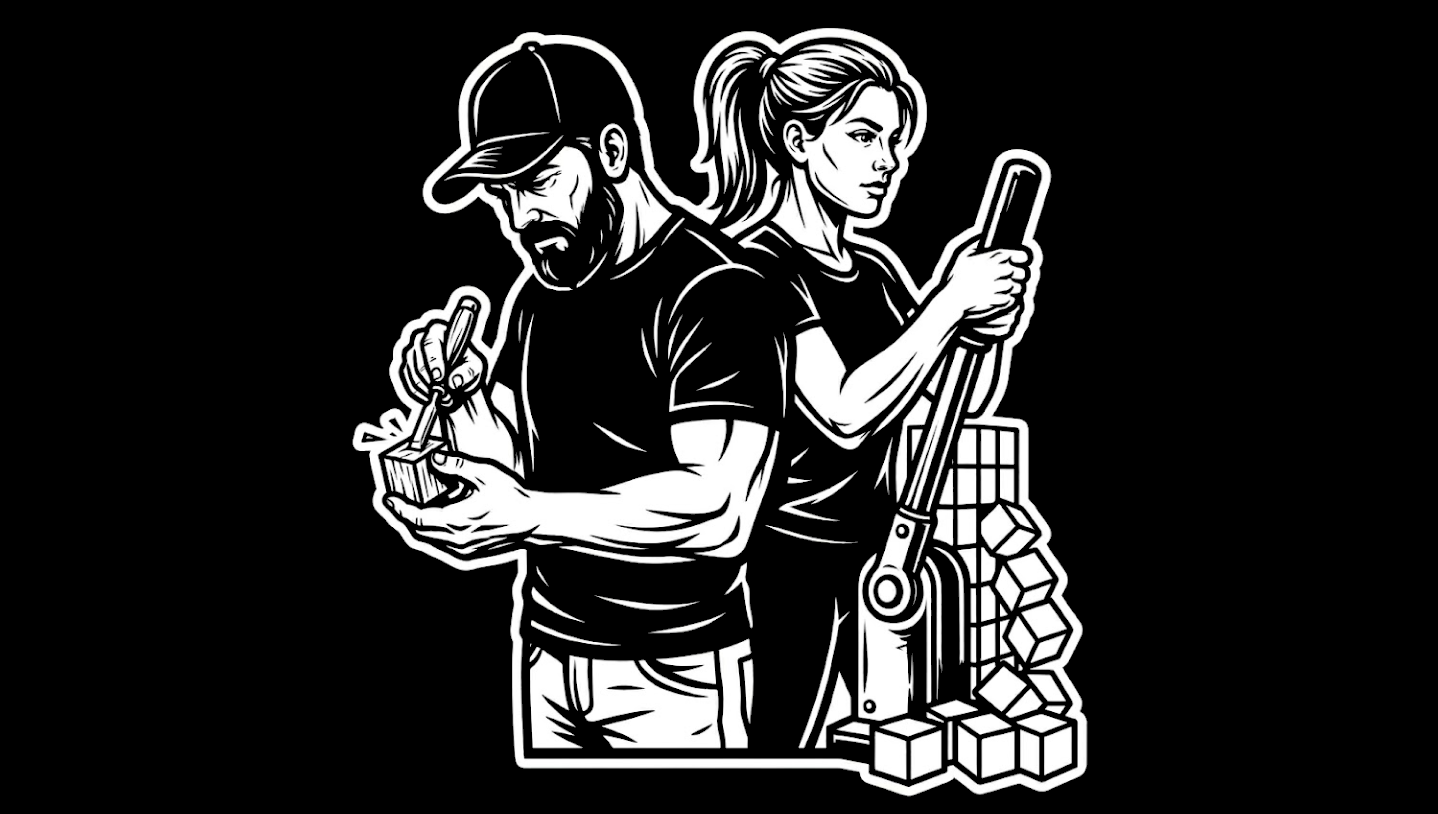
The tech lead who rejected agent mode to stay "pure" isn't preserving craft. He's preserving a version of the job that won't exist.
I write this as someone who loves writing code. Who still gets satisfaction from a clean function. Who will probably always enjoy the craft of it.
But I've had to accept that craft alone isn't the value anymore. The value is what you build with it. The systems you create. The leverage you generate.
Your AI agents aren't replacing your judgment. They're multiplying your reach.
If you're still measuring yourself by lines written, you're optimizing for the last war. The current is moving. The question is whether you're moving with it.